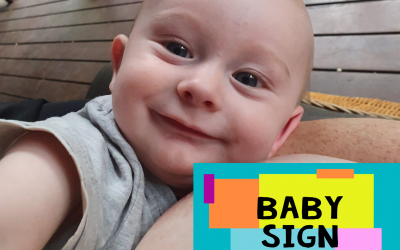
Check out this video of my little one using baby sign 🙂 He has been signing for booby since about 5 months old. It started with squeezing my finger or boob and progressed to making fists, and then finally to the opening and closing repeatedly of his fist to...
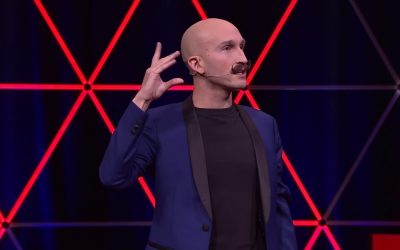
So my sister in law came across a deaf blog ranting about some dude from The Voice, Andy Dexterity doing Auslan when he is not deaf. There was a lot of anger about cultural appropriation and comments about Andy signing badly. It prompted my interest because obvious...
https://youtu.be/qFcFpWzIQNk First, this is an excellent and well done video, everybody needs to watch it! I'd like to touch on my first experience of this video as it completely slammed me. It was used as an educational tool in a support coordination course I was...
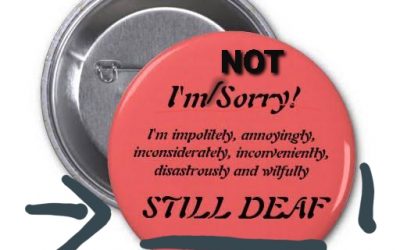
People keep calling my phone and I've finally worked it out! Deaf people can't possibly own phones, and this must be common knowledge! Of course!! This totally explains why there will be difficulty explaining to a caller why the deaf phone owner cannot come to the...
No really. I've removed names for privacy as this isn't about any of these individuals personally, but rather the social/cultural context of this discourse. Here are the highlights for those of you without the ability to see the image posted below: "I wonder how...
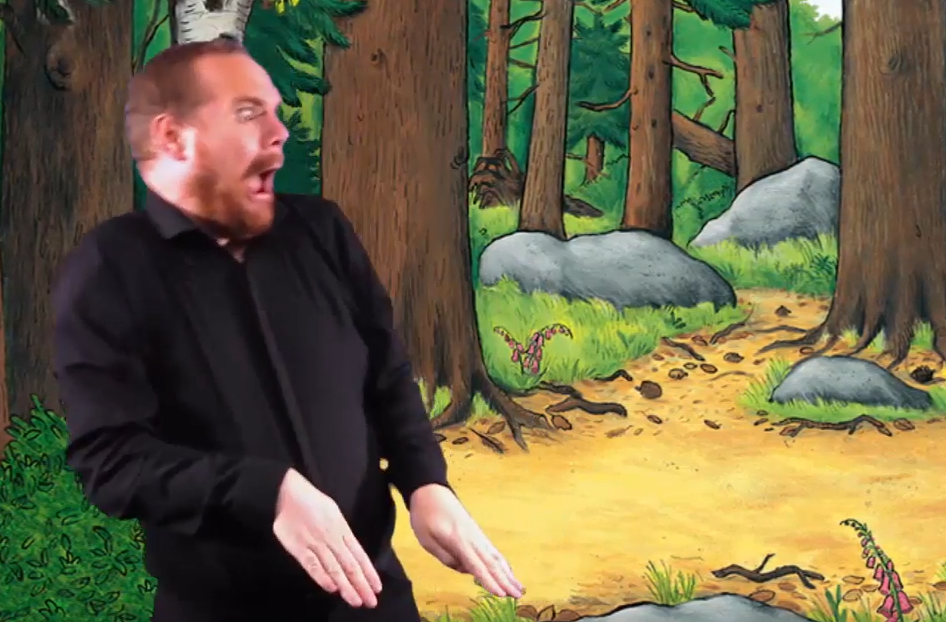
Wayne Sharples reading the part from “The Gruffalo” where the Fox learns he is the Gruffalo’s favourite food.
You know how people think in the language they were raised in? People raised with spoken language often report “hearing” in their head when they have thoughts.
My brain works similarly too as English is my first language. While I may not be able to hear, English is a spoken language and I think in English. I may not hear it in my head, but I don’t necessarily see the written words either. If I had to describe it, I think like I would talk. So I guess I kind of “feel” myself talking especially with lip and tongue movements as I speak English.
As a child raised with Signed English (which is English but manually on the hands), I had really poor experiences of Auslan and the deaf community at the time (very old school and narrow in worldviews). I didn’t fully understand Auslan was not English. When I got older and understood Auslan was indeed, NOT English despite English being able to be lipread on users of Auslan.
But this didn’t really do much in terms of truly understanding sign language which is not a spoken language, but a visual language.
Let’s look at this video of an ASL interpreter at a Flo Rida concert;
ASL interpreter at Flo Rida concert (Ai-Media)
This was my first insight into why my mother was so invested in sharing music with me via sign. It was also my first insight in sign language as a visual language. In this video clip you can clearly see the music come alive in the interpreter’s sign. The sign complements the beat of the music, and the beat of the music complements the sign. Very synergistic and definitely a wow factor there.
Later on, Ai-Media (love that group!) introduced me to deaf culture by making most of their sign language videos accessible to me with English subtitles. I came across this one in particular;
How are hearing people like deer? (Ai-Media, video created by Jakoms)
In the above video a Greek deaf artist called Lakis makes a joke by comparing hearing people to deer. It is a cool flip but what made this joke so freaking awesome is the sign language. You don’t need to know sign to get the joke because Lakis has made it so visual. He has essentially brought deaf experience alive via visual depiction rather than spoken explanation.
It knocked my socks off! Not that I wear shoes or socks but still! Yes, it was a fucking hilarious joke, as I have lived experience of these type of scenarios to identify with the joke. But the synergistic element was what made this video SO good. The joke itself AND the sign language used to communicate that joke.
A few months after seeing this video, a sign language interpreter that was interpreting for me further cemented my understanding of how sign language when done right, could convey information that others could hear outside of the word content of spoken language.
She was interpreting a phone call which occurred during a serious appointment. Like Lakis above, it was very fucking visual. She brought alive the fake coughing and ridiculous excuses of the party on the other end of the phone call. I literally could not believe it.
At first, I thought the interpreter was mocking the person and tried my best to keep a straight face. It was becoming increasingly hard as the excuses and bullshit that was coming over that phone call were so fucking out there that I had to interrupt her. I asked without using my voice – “Is this for real? Is this what (the other person) is saying? Is she actually saying it like that?” To my absolute shock, I got a very serious confirmation from the interpreter. She then continued to interpret the phone call.
It was unfortunate really, but I lost my shit. The phone call person was oblivious and clearly did not realise how obvious, transparent and ridiculous they were being, yet here they were trying to get away with making these excuses in their best acting voice. Talk about epic fucking fail! It was so unbelievable that I could not help but laugh. I had to turn my back to the interpreter so I could stop listening to the conversation.
It was a serious appointment remember, it was most inappropriate to laugh but my goddess, it was my first lived experience of spoken language made visual with ALL the information I was missing out on with the usual signing I was used to. The hearing people present had years of lived experience of hearing unbelievable bullshit like this and keeping a straight face. I didn’t!
Anyway fast forward to today. I had just recently been sent another video – this time a BSL storytelling of the kids story “The Gruffalo”, signed by Wayne Sharples;
Gruffalo by Wayne Sharples using BSL
This Wayne dude is fucking awesome. He showed me what it was like to bring spoken English and the pictures in a kids story book alive in a synergistic manner using sign language. I had to watch the video twice, the first time for the captions (which were auto generated shit but I needed what help I could get), and then again with the captions turned off so I could just watch the signing.
This is what finally clicked it for me. Sign language is visual. It requires brain processing power in an entirely different way to spoken language. This is why there is no English language being spoken on the lips of some Auslan interpreters (which pisses me off, I need English and lipreading to understand them!).
To pull watching the video off the second time around with no subtitles to refer to, I realised something. My brain needed to stop being English and just absorb visually like I might do so reading a picture book that has no words. It was challenging given my thoughts were English and were trying to decipher meaning… in English of course!
Thinking visually is something entirely different to thinking in spoken language. I suspect that ability is something that is required for sign languages like Auslan and BSL etc and is likely the missing link to understanding sign language as a visual language rather than a spoken one.
I’m not sure of the usefulness of such visual languages in educational context like schools and especially, universities with higher spoken language required. That is a blog post to explore another day though!
0 Comments